
Zinc House, London
The refurbishment and reconfiguration of Zinc House transformed an existing aparthotel in Clerkenwell, increasing its capacity from 15 to 35 serviced apartments while comprehensively upgrading the building’s environmental performance and operational efficiency.
Working within the constraints of an existing mixed-use building, the project introduced a new mix of studio, one-bedroom, two-bedroom, and three-bedroom serviced apartments through the careful reorganisation of the internal layouts. A key challenge was accommodating the significantly increased number of bathrooms while retaining the commercial premises at ground floor level, which remained outside the scope of the works. This required the layouts to be developed around the existing drainage infrastructure, with extensive coordination between architect and client to optimise apartment configurations and maintain efficient servicing throughout the building.
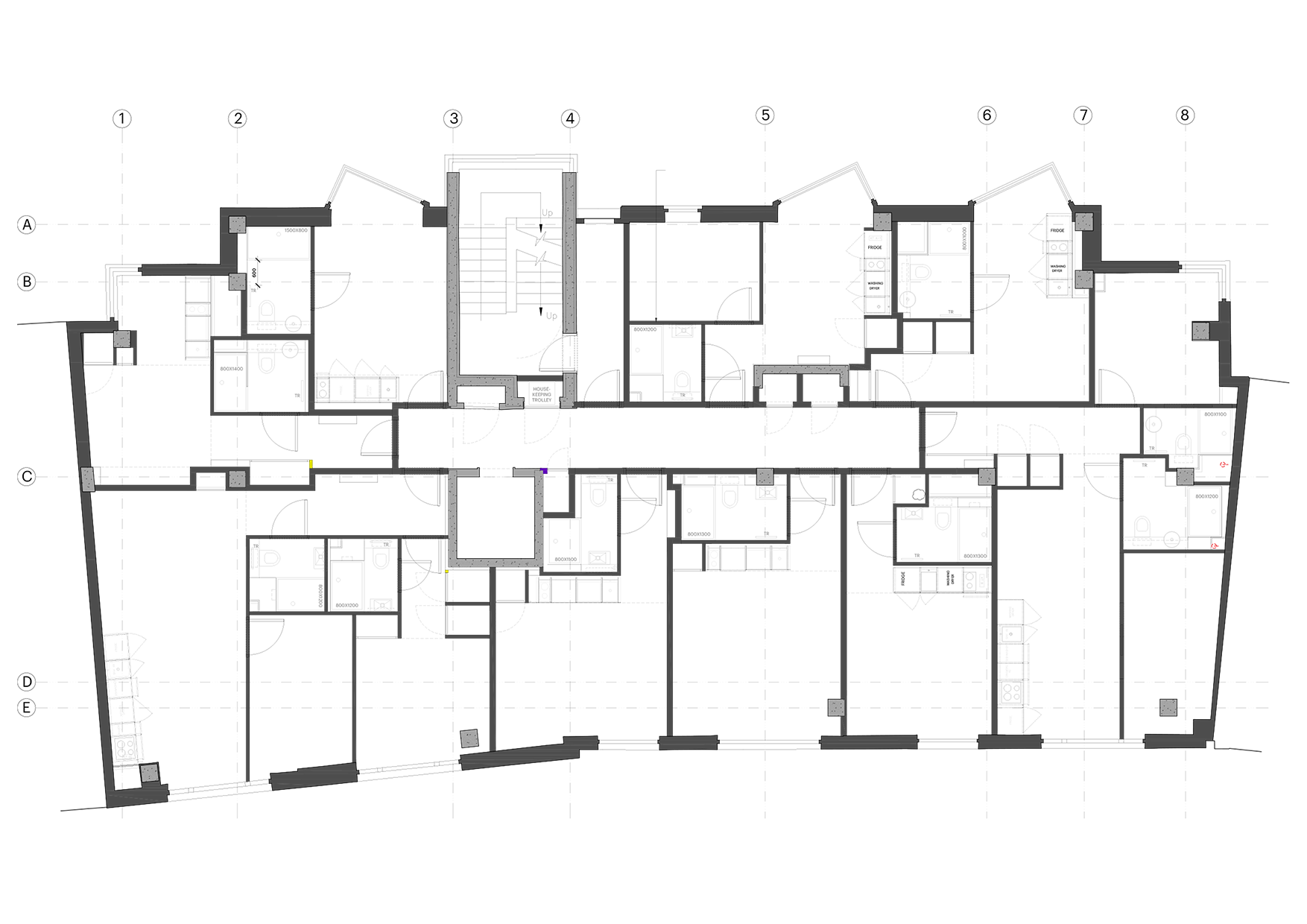
Floor Plan
Alongside the internal transformation, the project delivered a complete overhaul of the building services strategy. Existing systems were replaced with new air source heat pumps and a low-energy underfloor heating and cooling system serving the accommodation throughout, significantly improving the building’s operational performance and long-term sustainability credentials.
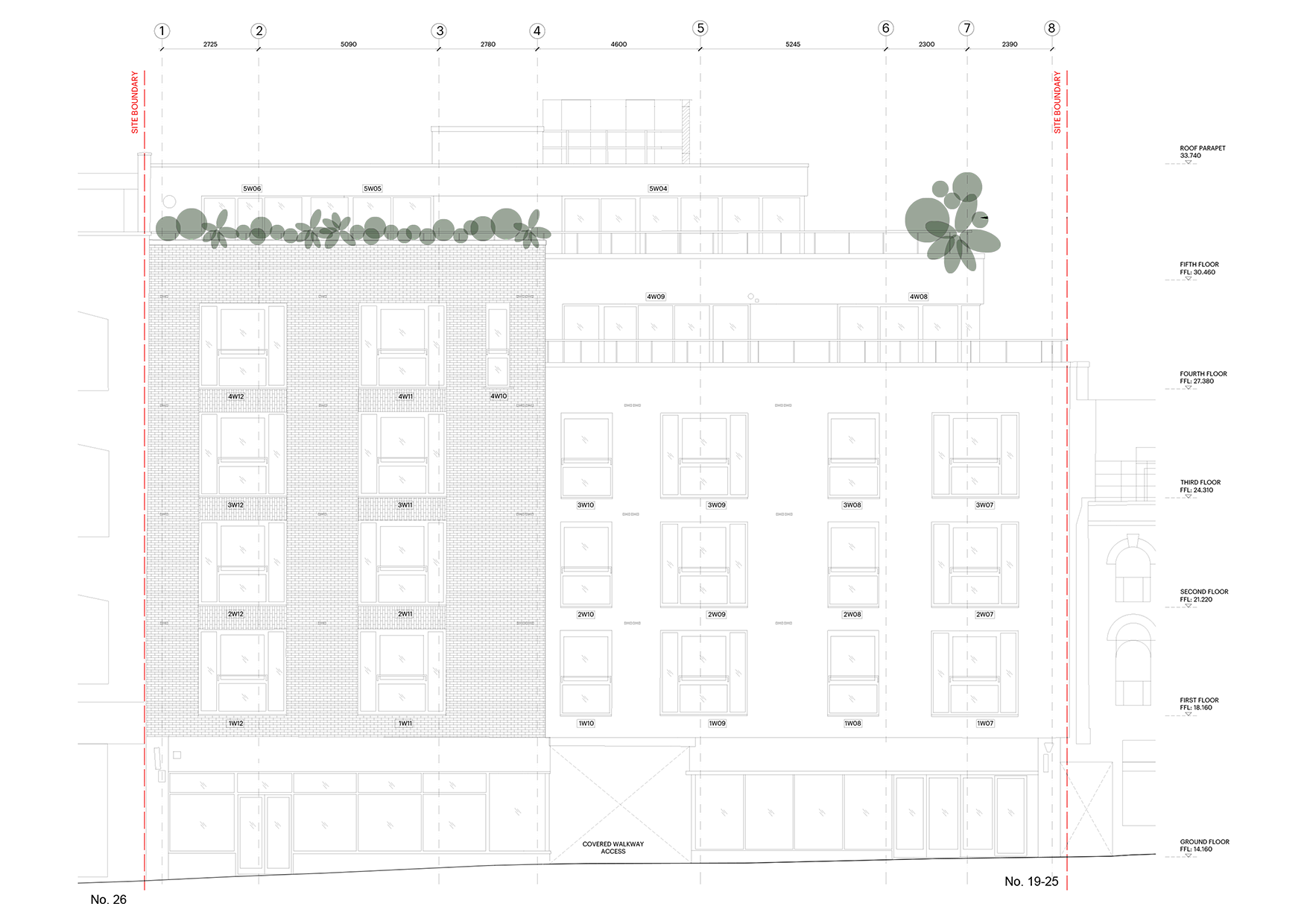
A planning application was secured for a discreet fifth-floor extension, creating an additional serviced apartment and refining the upper-level accommodation. Carefully set back from surrounding parapets and integrated within the existing roofscape, the extension was designed to remain subordinate to the host building while preserving the character of the Charterhouse Square Conservation Area. New blue roofs and enhanced roof-level planting contribute to sustainable drainage, biodiversity, and climate resilience, complementing the wider environmental upgrades delivered across the building.
Front Elevation - Cowcross Street
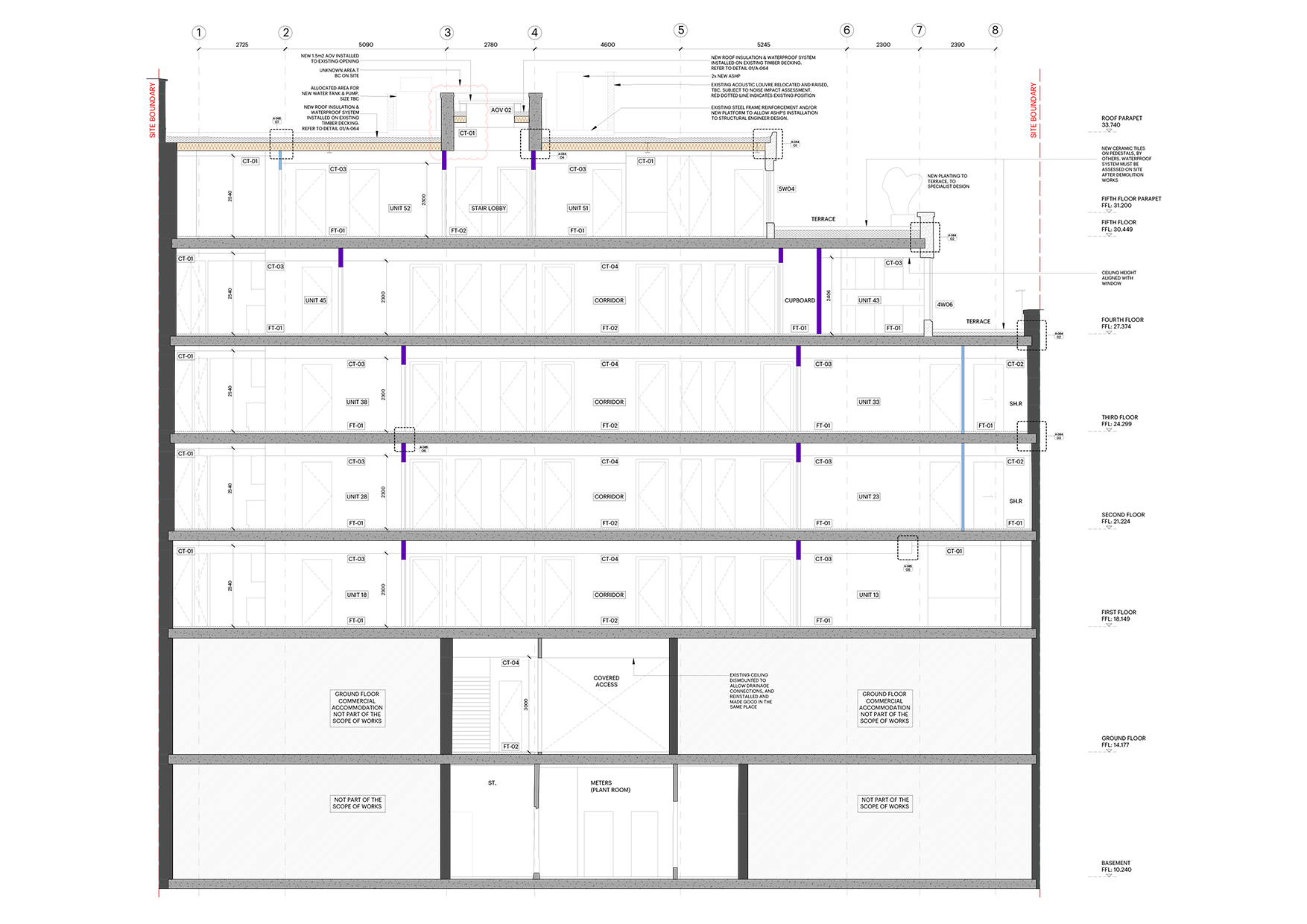
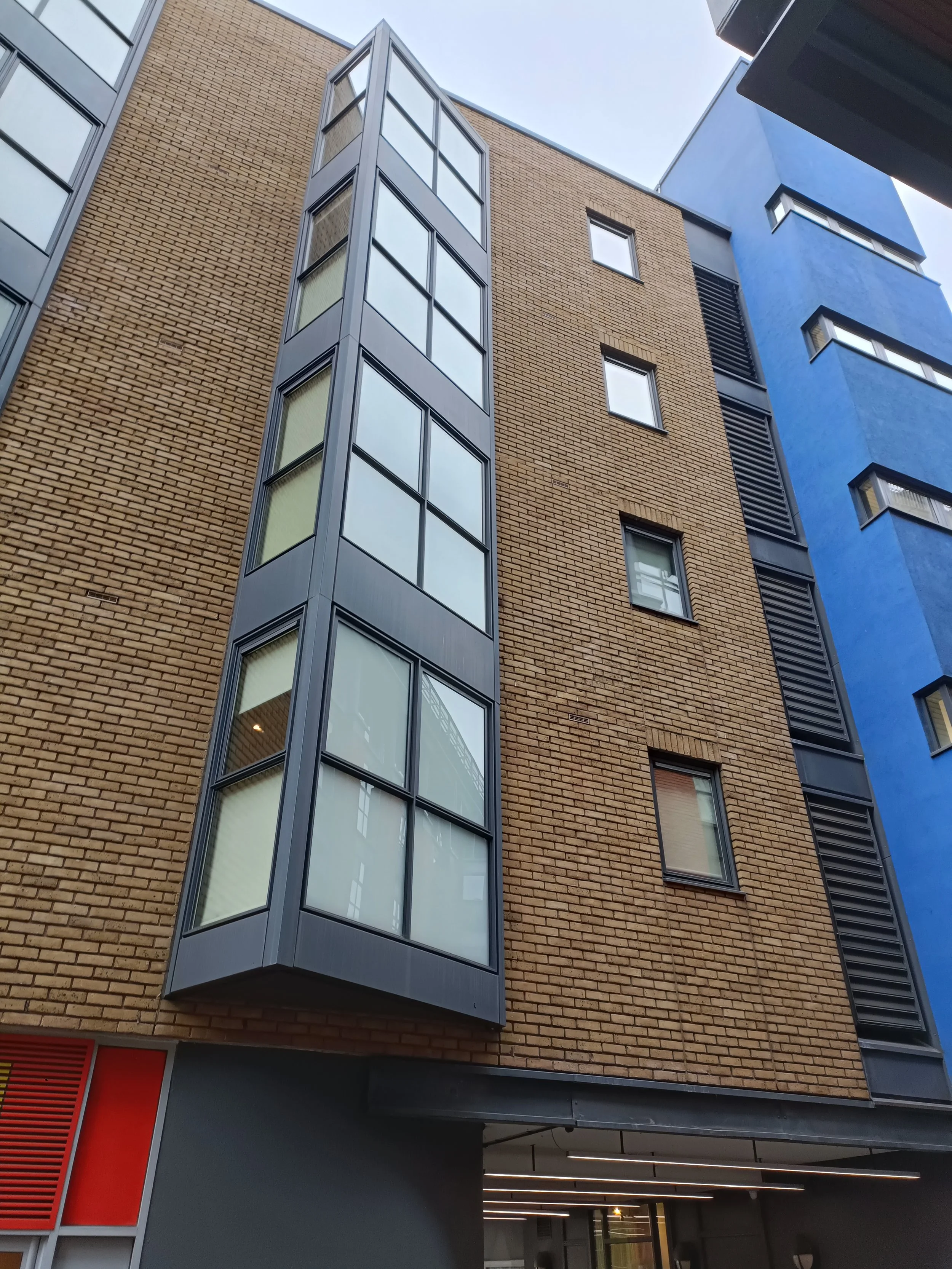
Building Section
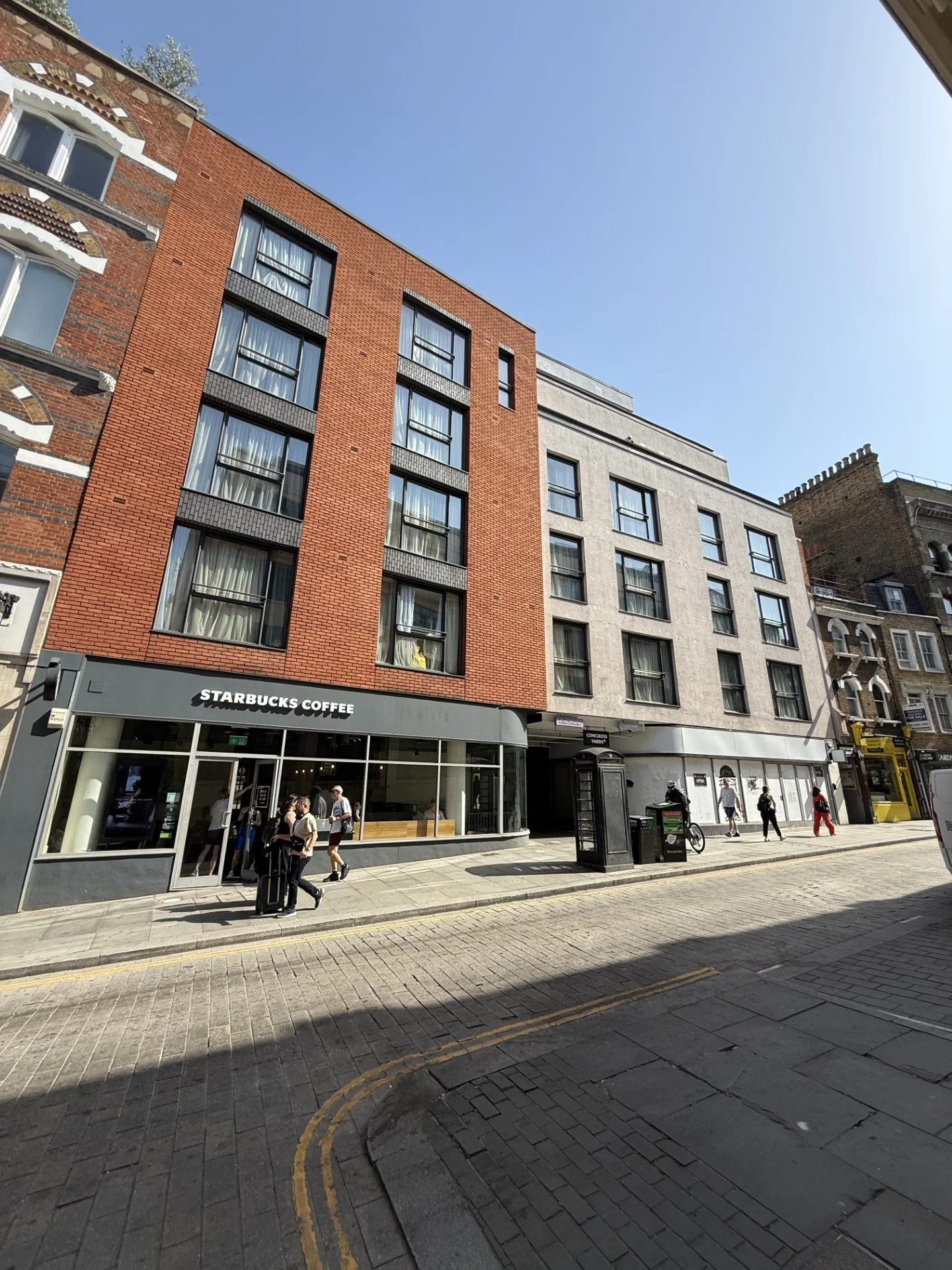
The completed project demonstrates how thoughtful reconfiguration and targeted interventions can unlock substantial additional capacity within an existing building while improving environmental performance and enhancing the quality of accommodation. More broadly, the project illustrates the potential of retrofit-led development to extend the life of existing buildings, delivering a significant increase in accommodation while reducing operational energy demand and minimising the need for major structural intervention.
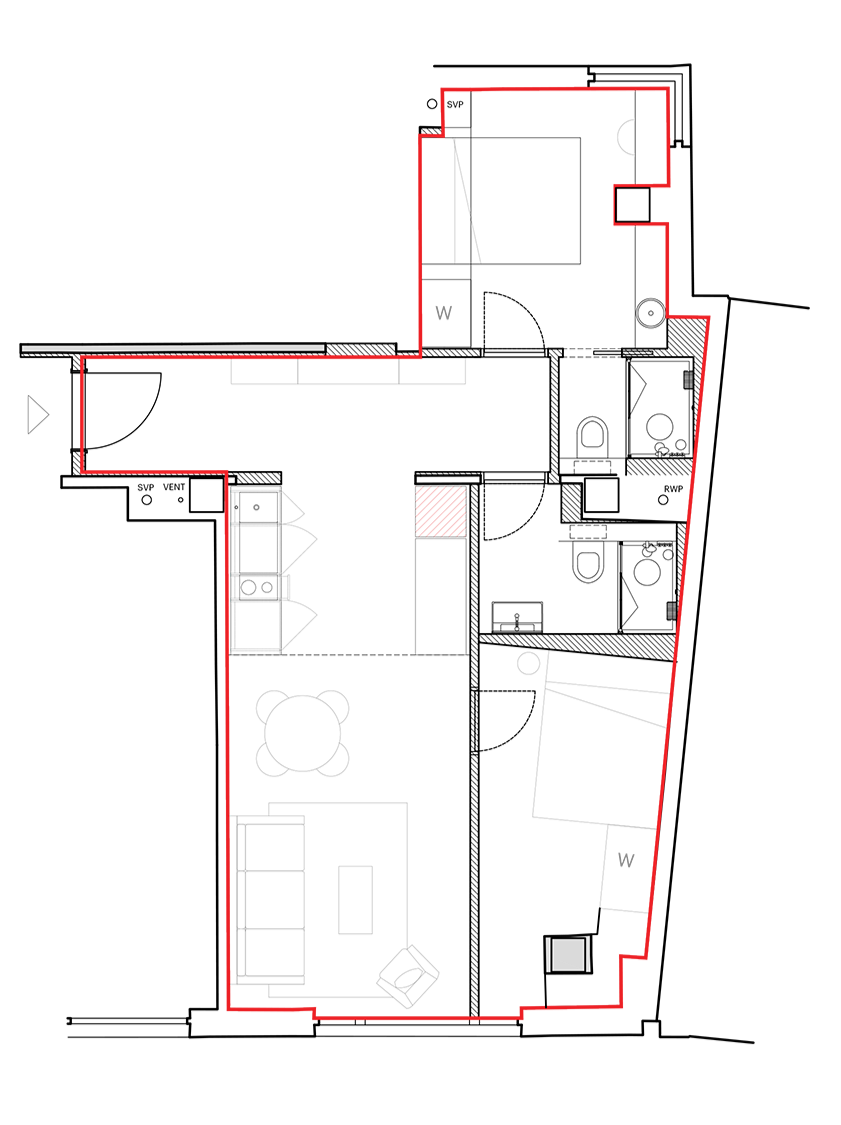
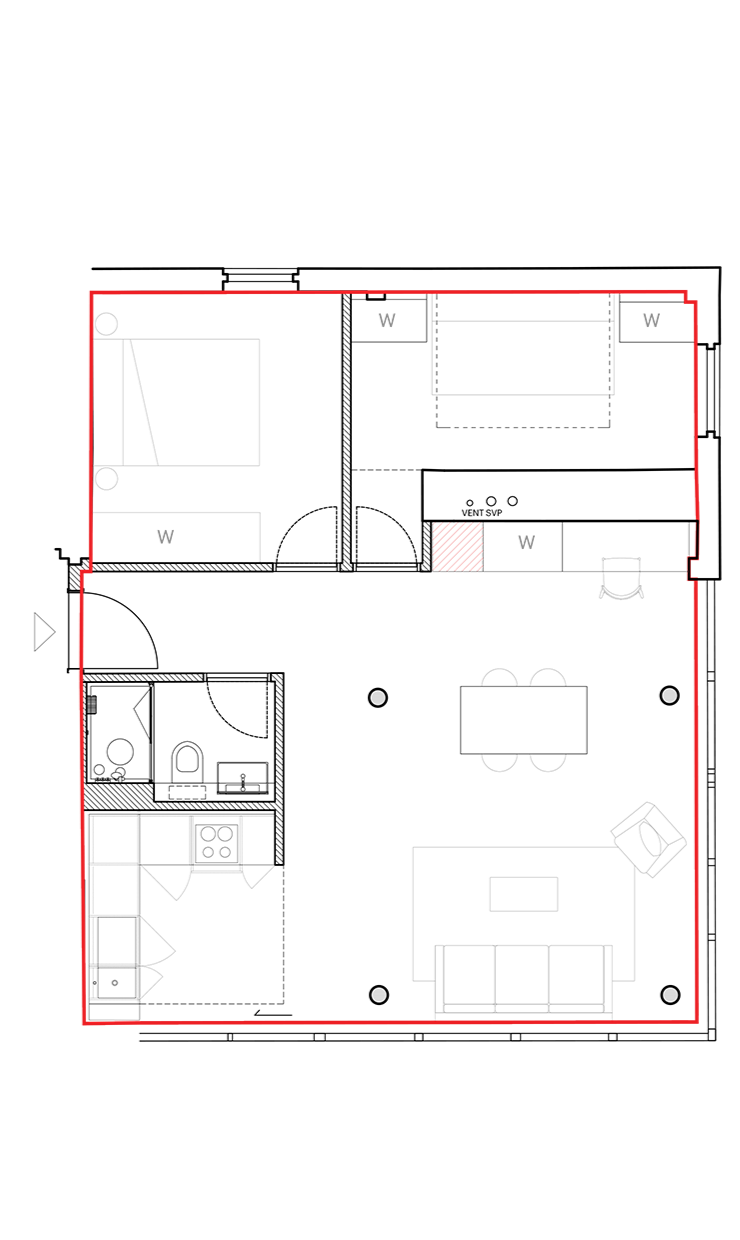
Typical Open Plan Rooms