
Solstice Point
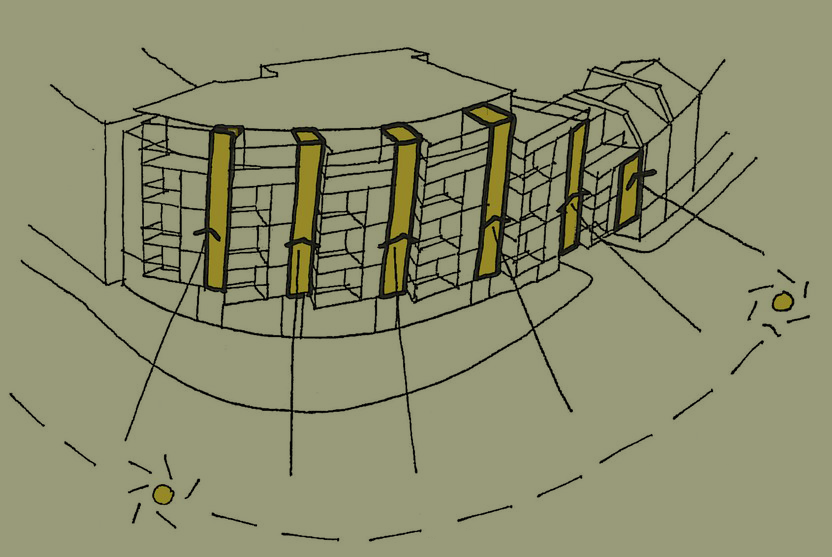
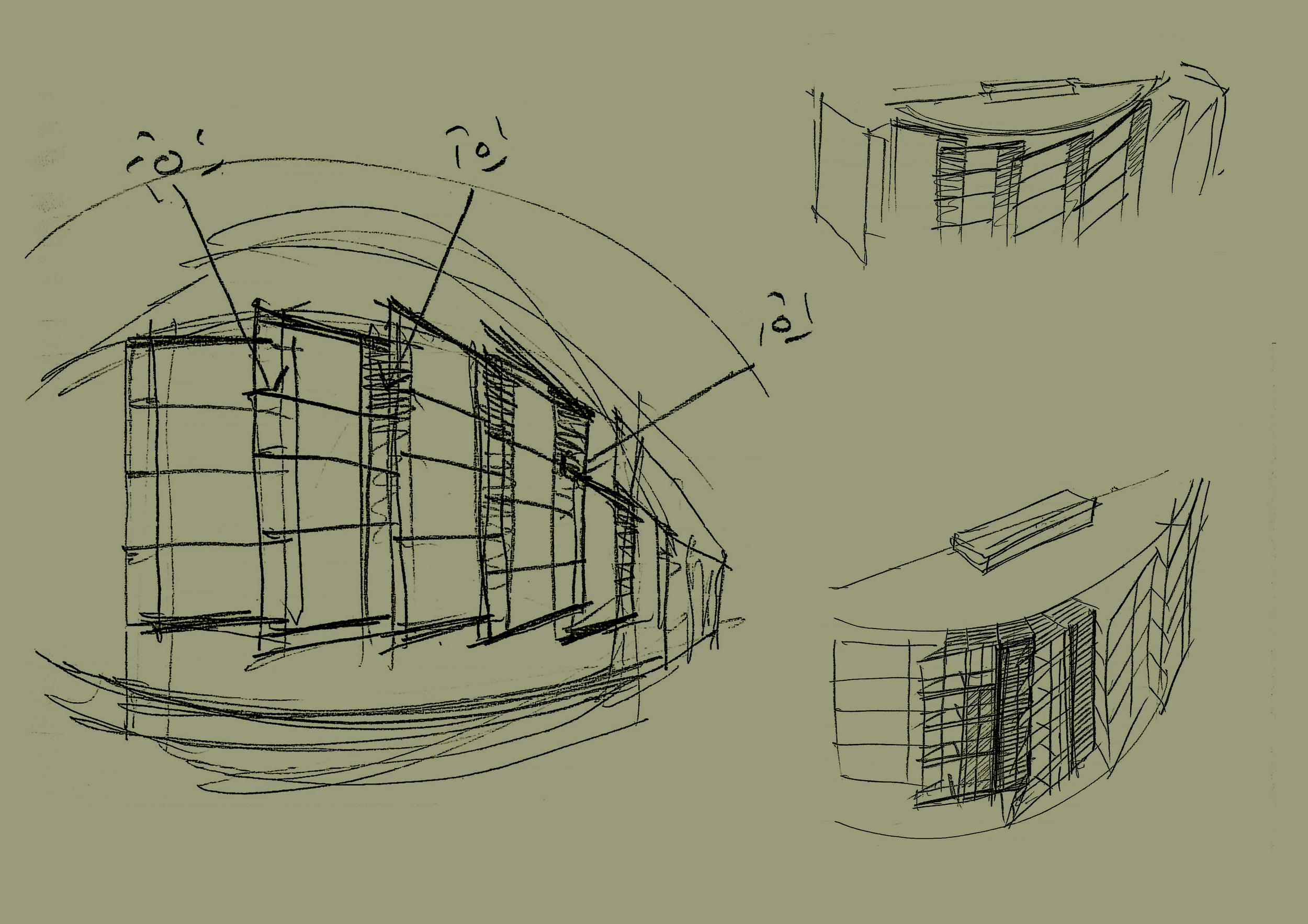
Concept sketch showing the solar thermal panels tracking the suns path

View from Parkway looking south
This mixed-use 5 storey scheme in Camden, London, consists of residential units, office space and an underground car park. The project was designed to fit between the Grade II listed Georgian terrace of Delancey Street and Parkway, whilst also providing a new identity to this corner site.
The Building boasts a selection of sustainable features including 93m² of solar thermal panels on its south facing façade.
Construction stage image showing the method of lifting the glazing panels into place
The first sketches were drawn in 2007, and the building was finally completed in late 2015. Solstice point is a complex of fourteen flats sited above ground floor rental space, with further housing and retail units set back around an internal courtyard.
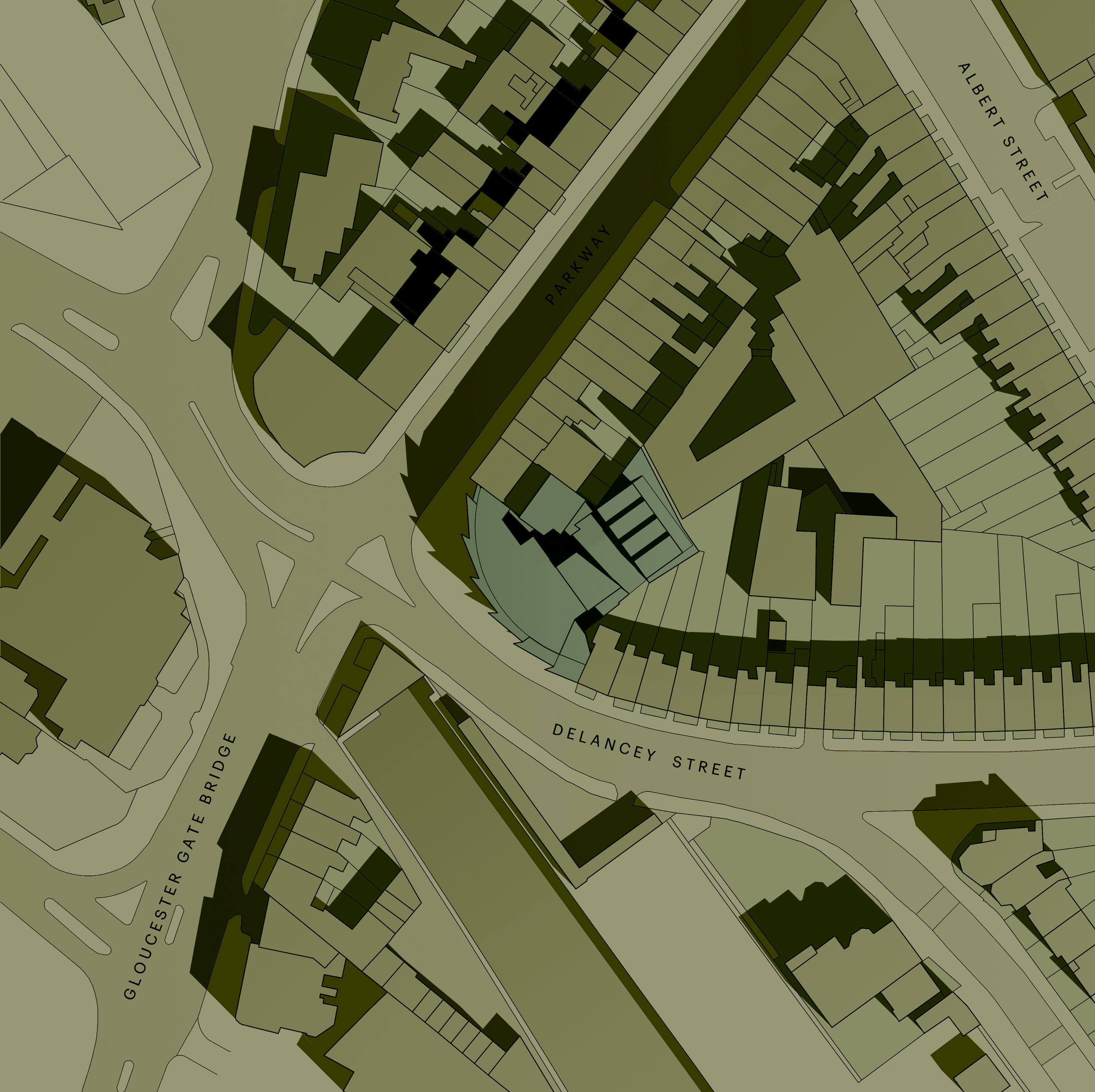
Location plan set due north showing the south west aspect of the site and its abillity to have no shadows cast on the facade by any neighbours
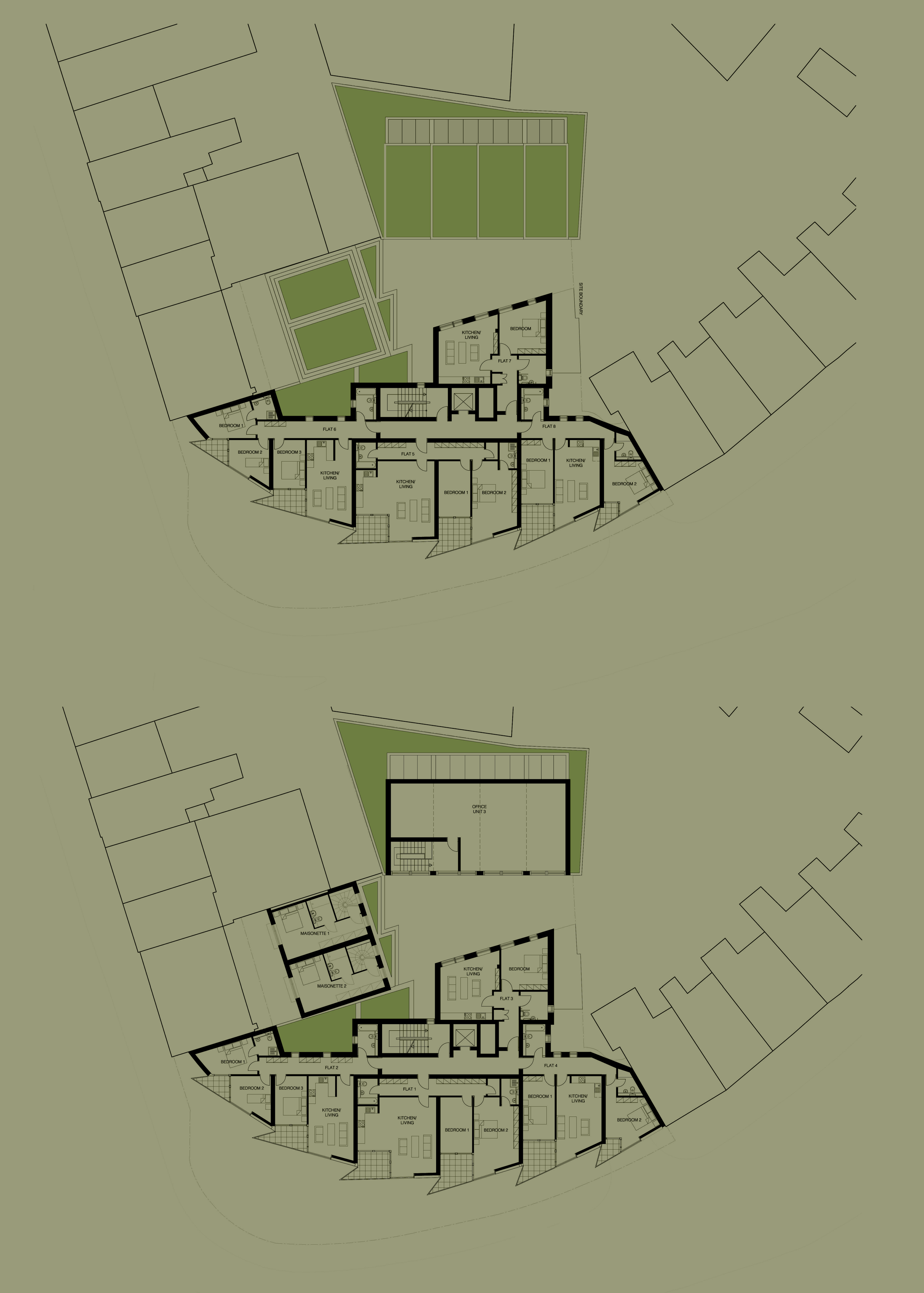
Typical floor plan and elevation showing the progressively longer shadows as they track around
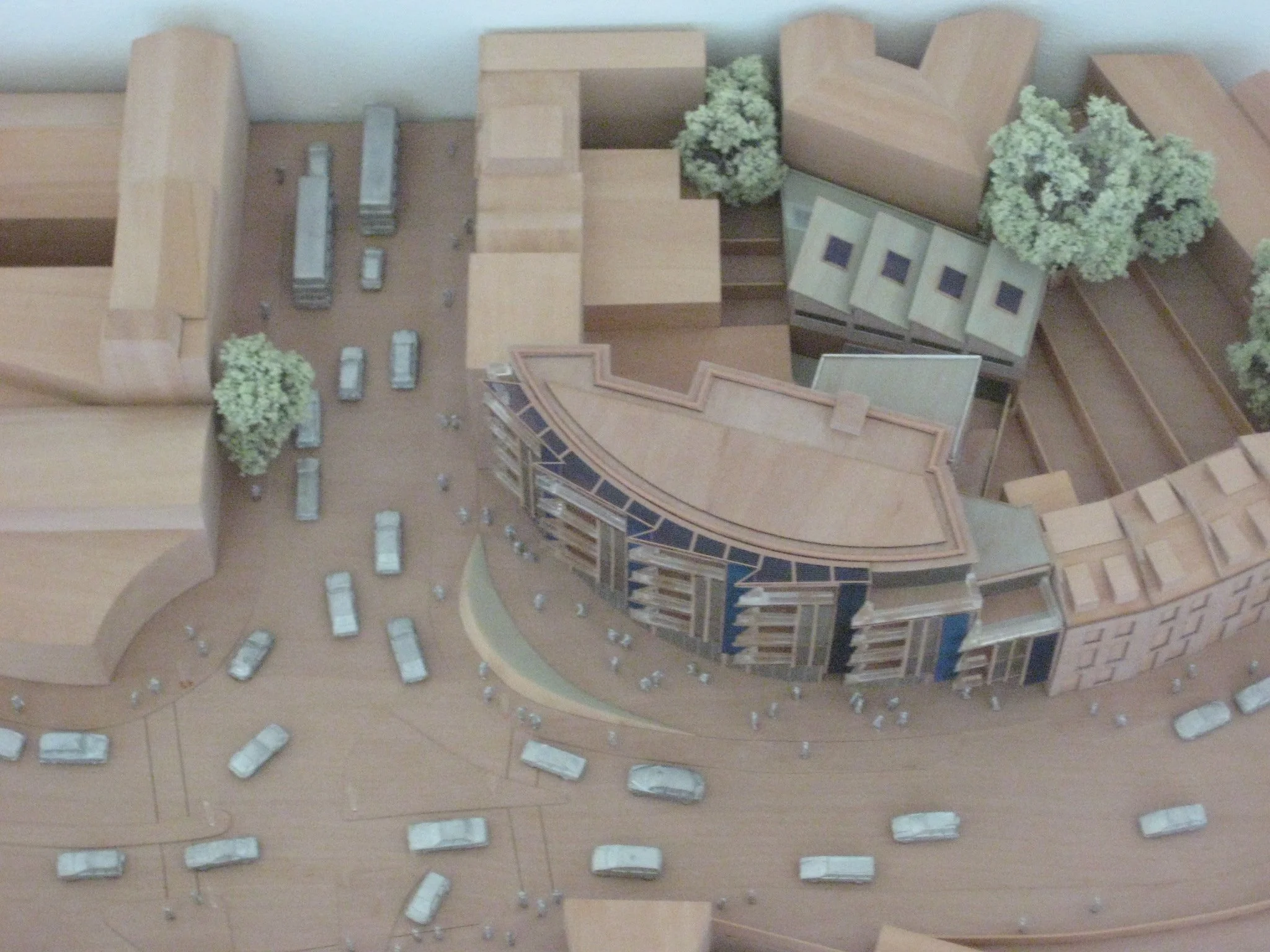
Timber model showing the facetted form turning the corner of Delancey Street into Parkway
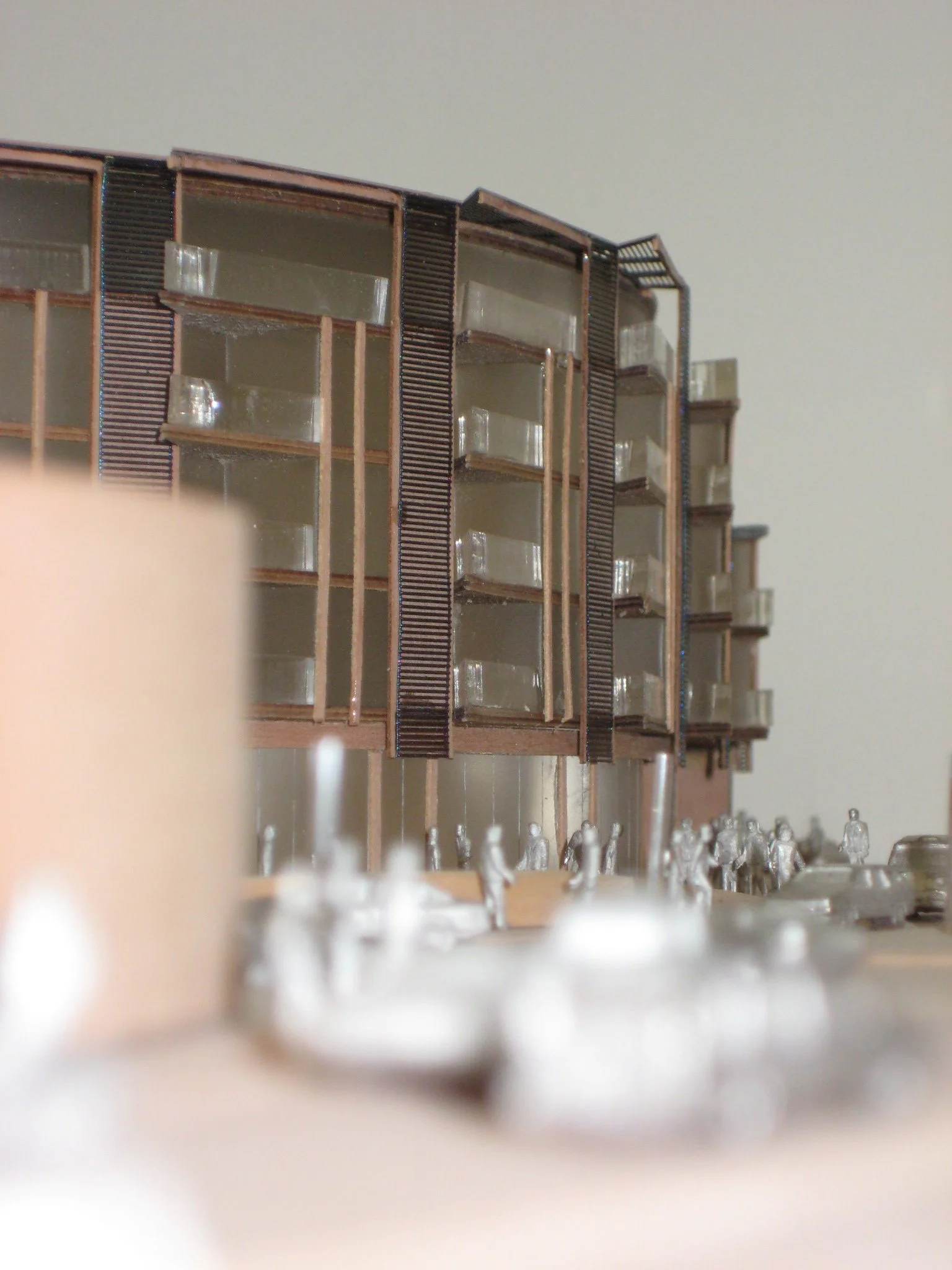
Detail view showing the balcony composition and the transparency between levels
The location presented a series of difficulties: the site was a gap between two terraces bounded by busy roads and sitting over the London to Birmingham mainline tunnel. Conventional wisdom would have been to continue the sweep with a brick facade to connect the two terraces. Instead, we chose to emphasise the corner aspect of the site by creating a curving stepped and cantilevered massing that culminated in a crescendo which added an additional storey in height to the previous schemes. Our solution has drawn praise and support for its bold and innovative approach to stitching a building into a charged and contrasting urban environment.
Detail view showing the relationship between the balconies and the brick bookend on Parkway
A nearby railway line created problems with low frequency noise and vibration. Our structural engineers, TZG Partnership, suggested that we solve this problem by mounting the upper floors on a layer of neoprene blocks which effectively act as springs.
The other impressive feature of the building is the use of solar panels stacked in five columns which provide the building’s source of renewable energy. Developments in the manufacture of solar panels meant that we were able to use panels in the vertical, rather than the horizontal plane. Our aim in this project was to design a building which was sustainable as possible. This was not just a reflection of our belief that architecture has a vital role to play in responding to the challenges that concern for the environment need not result in aesthetically dull buildings.
One of the peripheral opportunities which arose was that of designing an artwork to decorate a tall and narrow strip of wall which formed the edge of the site. We were inspired by the dramatic shadows created by the balconies and the name of the building, Solstice Point.
We captured the outline of the shadows at summer and winter solstice and had these etched on metal. This I feel reflects the dynamic nature of the building, and the way in which it responds to the ever changing light.
Solstice Point, London 2012
Client: AS Properties, Murphy Construction
Project Status: Built
Budget: £6.5m
Team
Nick Baker Architects
Nick Baker
Ian Peters
Alyn O’Donnell
Ignacio Calvo
Mechanical & Electrical Engineer
Environmental Engineering Partnership
Structural Engineer
TZG Partnership
Quantity Surveyor
Monro White Hilton