
Greencroft Gardens, Hampstead, London
Front elevation - Greencroft Gardens
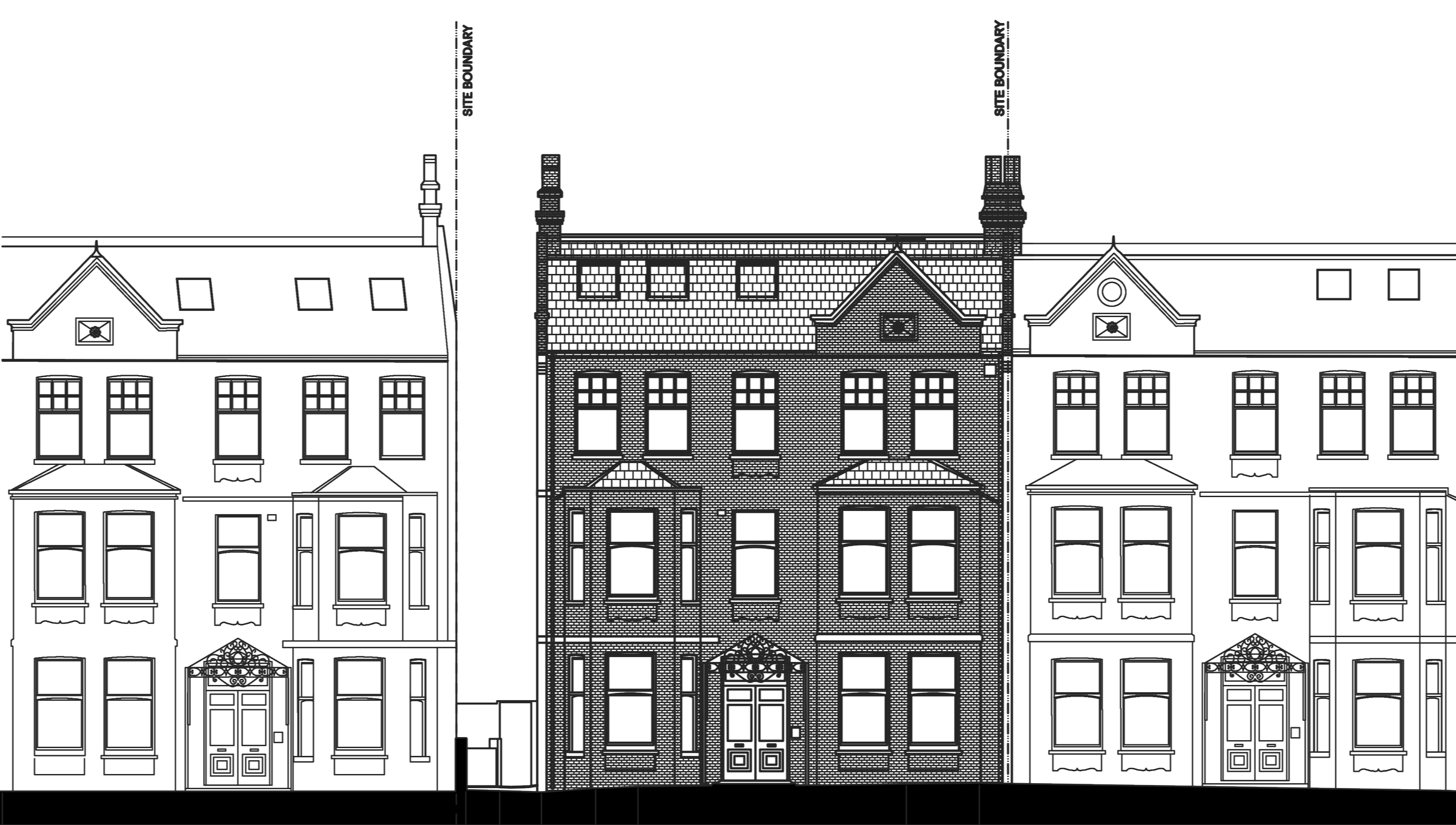
Nick Baker Architects were appointed by COHABS to refurbish and reconfigure 75 Greencroft Gardens, a substantial historic townhouse within the Greencroft Gardens Conservation Area in West Hampstead, London.
The project marked the first collaboration between the practice and COHABS and transformed a building that had fallen into significant disrepair into a 28-bedroom contemporary co-living environment.
Front elevation - Greencroft Gardens
The proposals focused on the careful adaptation of the existing building, balancing the introduction of high-quality shared living accommodation with the retention of the property’s historic character.
A comprehensive programme of refurbishment and internal reorganisation was undertaken throughout, alongside a new roof extension designed to provide additional living space while remaining sensitive to the proportions and rhythm of the existing building.
Interior views of the communal areas including kitchen/dining and gym
Many of the building’s original decorative features were retained and restored as part of the works, including historic joinery, mouldings, and internal detailing.
These elements were integrated within the wider refurbishment strategy, allowing the character of the original townhouse to remain legible throughout the completed scheme.

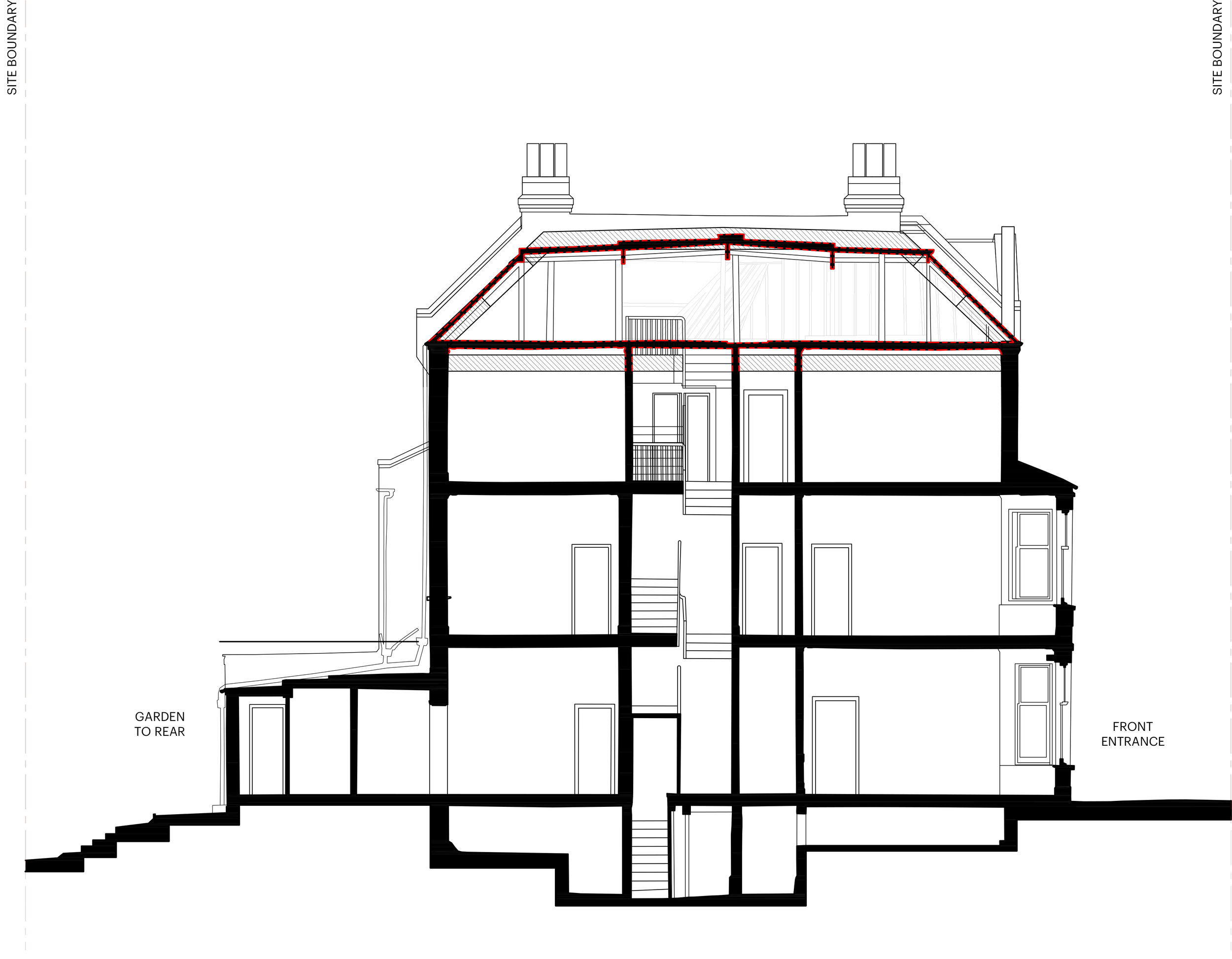
Plans and Sections
Internally, the layout was fully reconfigured to accommodate ensuite bedrooms alongside a series of shared amenities arranged around a singular large communal kitchen and a separate living room serving the wider building.
These spaces form the social heart of the project and were designed to encourage interaction and shared occupation while maintaining a clear distinction between communal and private areas. The arrangement also improves circulation, access to daylight, and the overall usability of the building within the constraints of the existing structure.
The original doors were retained and then used to create specialised panelling to the community area
The roof extension was designed as a discreet addition to the host building, carefully positioned to minimise its visibility within the surrounding conservation area. Its form and materiality were developed to complement the existing architecture while maintaining a clear distinction between historic and contemporary interventions.
The completed project establishes a refined balance between restoration and adaptation, transforming a neglected historic property into a coherent and high-quality co-living environment while preserving the architectural character of the building and its wider context.
Characteristic of typical rooms shows the retention of existing features and how they define the character of the new sapces
Clever simple design additions can create new identities out of past forms and features
“Some very good news and I was certainly pleasantly surprised. We have achieved B for the EPC. Well done everyone and a pat on the back to the chaps at Nick Baker Architect”
-Rod Werninck, MEP Consultant
Exisiting staircase and stained glass windows retained
Exisiting period features are retained and given a collage styel interior design
Rear elevation and amenity garden space for summer events and BBQs!
Greencroft Gardens, London
Client: COHABS London
Project Status: Built
Budget: Confidential
Team
Nick Baker Architects
Ignacio Calvo
Mechanical & Electrical Engineer
Werninck
Structural Engineer
Bailiss & Co